Faith Communities
Faith Deserves a Deeper Conversation
Something is shifting in faith communities everywhere. People are hungry for depth. They are tired of surface level answers to the deepest questions a human being can ask. They want their faith to be the place where they can finally stop pretending.
Whether your community is 50 people in a living room or 15,000 on a Sunday morning, the invitation is the same. Go deeper. Get honest. Build the kind of community where people do not have to choose between their faith and their authenticity.
The nuda veritas gives faith communities language for the conversation that matters most. Not what you believe. Who you actually are.
Deep Crying Out to Deep
Psalm 42 says it. Deep calls to deep. Something in the human soul is designed to reach for something real. Not something explained. Not something managed. Something felt in the marrow. The ache that wakes you up at 3 a.m. and will not let you go back to sleep. The quiet knowing that there has to be more than this.
Religion at its worst walls that off. It replaces the ache with answers. It replaces the reaching with rules. It replaces the mystery with certainty. And the people who cannot survive that trade leave. Not because they are faithless. Because their faith is too alive to be contained by a system that is afraid of honest questions.
Faith at its best creates a container where the reaching can happen safely. Where doubt is not punished. Where struggle is not pathologized. Where the deep in you is allowed to cry out without someone rushing to give you a three point sermon about why you should stop crying.
The nuda veritas does not measure your theology. It does not care about your denomination or your doctrine or your worship style. It measures something more fundamental: the distance between who you say you are and who you actually are. That gap is not a sin problem. It is a self-awareness problem. And it is the single most destructive force in any faith community on earth.
Two Lives. One Question.
What does faith look like when someone actually lives it versus when someone performs it? The difference is not theology. It is self-awareness. It is the willingness to stand in front of the mirror and report what you actually see.
Faith Lived Honestly
Brennan Manning
1934 – 2013
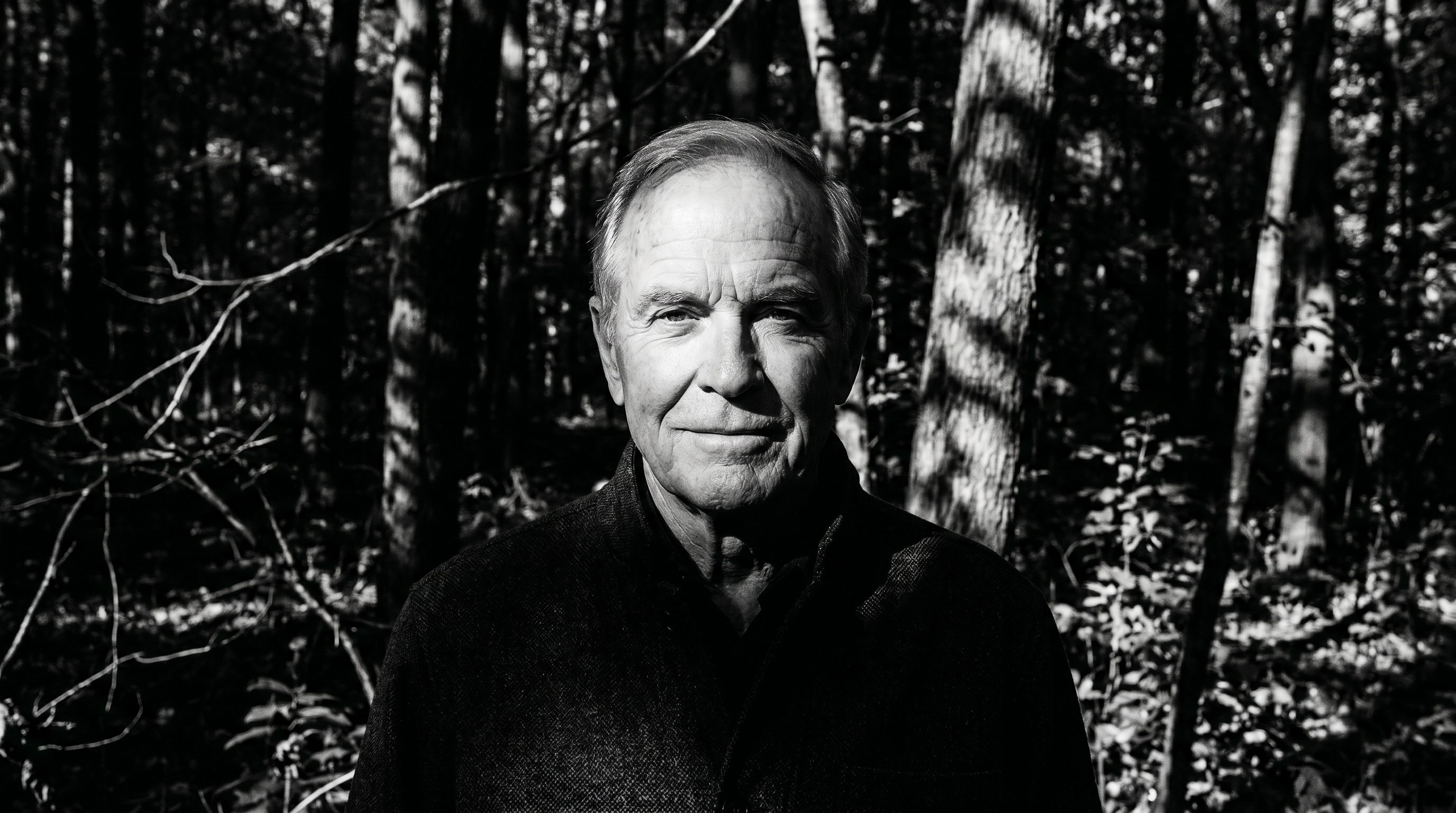
“I am a passionate man who loves Jesus with a sensational appetite for beer.”
Brennan Manning was a Franciscan priest who wrote The Ragamuffin Gospel, a book that has sold millions of copies and reshaped how an entire generation thinks about grace. He spoke to packed stadiums. He moved people to tears with his raw, unflinching honesty about the love of God.
He was also an alcoholic. He checked himself into treatment centers multiple times. His marriage fell apart. He lost speaking engagements. He never cleaned it up for the cameras. He never pretended to have it figured out.
He died in 2013 in a small house in Mississippi, largely alone. His final book closed with the only thing he said he had left: the relentless, furious love of God that would not let him go.
That is faith with the mask off. Not polished. Not performed. Not marketable. Just a man standing in the fire of his own brokenness and refusing to lie about the heat.
The NV Reading
Manning would have scored high on Empathy and Emotional Courage. His NV Gap would have been narrow. Not because he was whole, but because he refused to pretend he was. The distance between who he was in public and who he was in private was almost zero. That is what authenticity actually looks like. It is not the absence of struggle. It is the refusal to perform through it.
What Happens Without a Mirror
Mark Driscoll
Mars Hill Church, Seattle
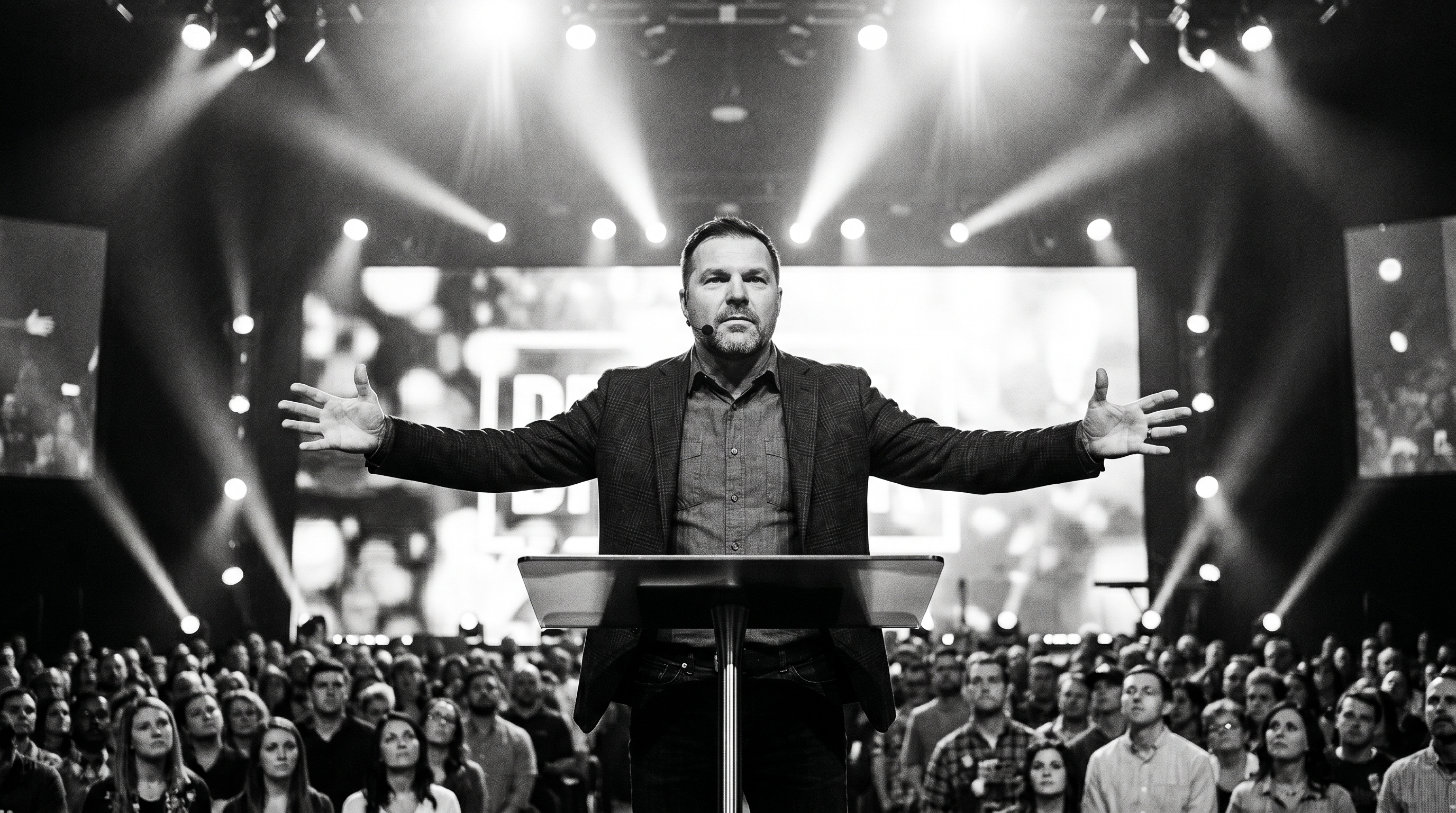
Mark Driscoll built Mars Hill Church from a living room Bible study into a network of 15,000 members across 15 locations in barely a decade. He was gifted. Magnetic. He made church feel relevant to a generation that had written it off. There was real talent there and real calling.
But without self-awareness, gifting becomes a weapon. As the church grew, former staff described a culture where questioning leadership meant being sidelined. Elders who pushed back were removed. The community that had drawn people in began pushing people out. The very intensity that built the church became the thing that broke it.
In 2014, Mars Hill collapsed. Thousands of people lost their spiritual home. Many walked away from church entirely. Not because they lost faith, but because they lost trust.
This is not about one person being a villain. This is about what happens to any leader, in any community, when the shadow goes unnamed. When nobody in the system has the language or the permission to say what they are seeing. The tragedy of Mars Hill is not that it was led by a bad person. It is that a gifted person never had a mirror honest enough to show him what his gifts were costing the people around him.
The NV Reading
Imagine if Driscoll had taken the nuda veritas at 30, before the empire was built. If someone had shown him where his Influence was outpacing his Empathy. Where his Conflict Courage was actually conflict dominance. Where the NV Gap between his public persona and private behavior was growing wider every year. It might not have changed everything. But it would have given the people around him language for what they were experiencing. And language is often the difference between a community that heals and one that shatters.
Both men stood on stages. Both moved crowds. Both claimed Jesus.
One knew who he was. The other never had the tools to find out.
The nuda veritas measures the difference.
A Moment of Extraordinary Opportunity
The landscape of faith in America is shifting faster than at any point in modern history. Attendance patterns are changing. People are asking harder questions. The old assumptions about what holds a community together are being tested everywhere.
Many churches are responding with real courage. They are rethinking what depth looks like. They are creating space for doubt alongside devotion. They are admitting that the old playbook of bigger, louder, and faster was never the point.
But even the most courageous communities often lack one critical thing: a shared language for what is actually happening inside the people in the room. You can preach authenticity every Sunday. You can build the warmest culture in town. But if the people in your pews do not have a way to understand their own wiring, their own shadows, their own patterns, the depth stays aspirational instead of actual.
This is the opportunity. Not to fix what is broken. To go deeper into what is already real. Every faith community that has the courage to look in the mirror right now has a chance to become the kind of place people are desperate to find.
The communities that go deepest will be the ones that last.
Four Questions That Change Everything
You do not need a consultant to diagnose your faith community. You need honesty. Start with these four questions and let the answers sit with you before you try to fix anything.
What does your community reward?
Performance? Certainty? Attendance? Giving? Whatever your community celebrates most loudly tells you what archetype it orbits around. And whatever it orbits around, it will eventually worship. That is the danger of an unexamined community. The thing it rewards becomes the thing it demands.
What does your community punish?
Doubt? Struggle? Questions? Slow growth? The things your community punishes are the things it fears. And the things it fears are the exact places where God is trying to do the deepest work. When a church punishes vulnerability, it is telling its people that the gospel only works for the strong. That is not a theological position. That is a shadow.
What is your community afraid of?
Every congregation has a collective fear. Some fear irrelevance. Some fear conflict. Some fear change. Some fear honesty. The fear shapes everything. It determines who stays, who leaves, who leads, and who hides. NV surfaces the fear so it can be named and held instead of running the system from underneath.
Who is missing?
If every voice in your community sounds the same, you do not have unity. You have conformity. Look at who left. Look at who never felt welcome. Look at who stopped showing up. The missing people are the missing archetypes. They are the growth edge your community rejected because it was too uncomfortable.
For the Ones Who Left
If you deconstructed, this is for you. Not to pull you back into something that hurt you. Not to convince you that the institution was right all along. You left for a reason and the reason was probably valid.
But here is the thing about deconstruction. It tears down the walls. It does not build new ones. And at some point, standing in the rubble with no structure at all starts to feel just as dishonest as the building you walked out of.
Reconstruction is not going back. It is building something different. Something that can hold all of you. The doubt and the longing. The anger and the ache. The part that is done with religion and the part that still whispers at 2 a.m. that there has to be something more.
NV does not tell you what to believe. It tells you who you are. And knowing who you are is the foundation for building anything that actually lasts. Including faith.
What It Looks Like When a Community Goes Deep
Imagine a small group where every person has taken the nuda veritas. The Sage in the group knows she tends to dominate with insight, so she pauses and asks what others see. The Builder knows he jumps to solutions, so he sits in the discomfort a little longer. The Scarred knows he hides behind humor, so he takes a breath and says the real thing.
Nobody is performing. Nobody is trying to be the most spiritual person in the room. They are just being honest. And the honesty creates a kind of sacred space that no amount of worship music or theological brilliance can manufacture.
Now imagine that same dynamic in a pastoral team. In an elder board. In a marriage ministry. In a recovery group. Every layer of the community operating with shared language for what is actually happening between people. Not judgment. Not labeling. Just understanding. The kind of understanding that makes real grace possible.
This is not theoretical. This is what faith communities were designed for. A place where deep calls to deep. Where the whole person is welcome. Where growth is not a performance metric but a shared journey.
Putting This to Work
Whether your community is a house church or a megachurch, the application is the same. Here is how faith communities are using NV to go deeper.
Pastoral Staff Health
Most pastoral burnout is not about workload. It is about carrying emotional weight without language for what you are holding. When a pastoral team takes NV together, they stop interpreting archetype collisions as spiritual failures and start seeing them as structural dynamics that can actually be addressed.
Small Groups That Go Deep
Most small groups stay on the surface because nobody has permission to go further. When members know their archetypes and vital signs, the pretending stops. The Sage stops dominating with knowledge. The Scarred stops hiding their wounds. The Builder stops trying to fix everyone. Each person brings who they actually are instead of who they think they should be.
Elder and Deacon Teams
Church boards make decisions that affect hundreds of families. When those boards are archetype blind, they default to the loudest voice or the most dominant personality. NV gives governance teams a shared framework for understanding why they keep having the same arguments and how to actually move through them.
Pre-Marital and Marriage Ministry
Every marriage in your church is an archetype relationship. Two people with different wiring, different shadows, different growth edges. NV gives couples language that is more specific than love languages and more actionable than personality types. It shows them exactly where their blind spots overlap and where they are most likely to hurt each other without meaning to.
Recovery and Healing Ministries
Recovery programs in faith communities often struggle because they add spiritual pressure to an already overwhelming process. NV removes the spiritual performance layer and focuses on what is actually happening in the person. What are they avoiding? Where is the gap between who they present and who they are? That gap is where the real work lives.
Transition and Succession
When a founding pastor leaves, the church almost always enters crisis. Not because of theology, but because the community was organized around one person's archetype. NV maps the outgoing leader's profile against the congregation's needs and helps the transition team understand what they actually need next, not just who preaches well.
Grace Is Not the Absence of Truth
The word grace has been weaponized so thoroughly that it barely means anything anymore. In some communities, grace means “do not hold anyone accountable.” In others, it means “forgive the pastor and stop asking questions.” In the worst cases, it means “pretend the abuse did not happen.”
Real grace is not the absence of truth. It is the presence of compassion alongside truth. It says: I see exactly who you are. I see the shadow and the light. I see the gap between who you present and who you are. And I am not going anywhere.
That is what Manning embodied. Not perfection. Presence. He stayed in the fire of his own brokenness and refused to perform wholeness he did not possess. And paradoxically, that raw honesty is what made his words about grace hit harder than a thousand polished sermons from leaders who had never sat with their own shadow.
NV gives communities a shared language for this kind of grace. Not the sentimental kind that avoids hard conversations. The real kind that makes hard conversations possible because everyone in the room has already looked at their own results and knows they have work to do too.
Start With Yourself
The most powerful thing you can do for your faith community is get honest about who you actually are.
Take the assessment. See your archetype, your vital signs, your shadow, and your NV Gap. Then bring what you learn back to the people you walk with. That is where the deeper conversation starts.